(STAGE 2 - RESEARCH)
Home Videos have been around for the whole of my life and I am now surrounded by home videos all the the time. We have seen them evolve from extremely wealthy being able to buy and use them to anyone with a digital camera or mobile phone!
Home Videos have been around for the whole of my life and I am now surrounded by home videos all the the time. We have seen them evolve from extremely wealthy being able to buy and use them to anyone with a digital camera or mobile phone!

<- This is the first ever camera that took still images. It was created in 1814 by Joseph Niepce in Paris, France. However, talk of caeras had been around since the 5th and 4th centuries when Chinese and Greek philosophers discorverd the basic principles of optics and the camera. This camera is called a Camera Obscura. The fault with this was that it took 8 hours of light exposure to show and took little time to fade away again.
From then on the camera developed, adapted and was able to create film.
It is very hard to say when the first ever home video was made because it depends what people count as movies. For instance, are a series of pictures regarded as a movie?
Roughly however, the first home video ever made was in 1888 and it was called 'Roundhay Garden Scene' it was only 3 seconds long though. It was filmed by Louis Aimé Augustin Le Prince using the Le Prince single-lens camera which was made in the same year (1888). It was taken in the garden of the Whitley family house in Oakwood Grange Road, Roundhay, a suburb of Leeds, Yorkshire, Great Britain. It is said to have been filmed on October 14, 1888. In the film Adolphe Le Prince (Le Prince's son), Mrs. Sarah Whitley, (Le Prince's mother-in-law), Joseph Whitley and Miss Harriet Hartley can be seen walking across the garden. These family and friends are shown walking around in circles, laughing to themselves. It only includes 4 frames.
Number 1
The creation of motion picture cameras and projectors in the 1880s created a brand new audience to join in with home movie making. It lured in wealthy individuals with the financial backup to go out and purchase a home movie camera of their own. A lot of old films were actually made out of highly flammable material called nitrate. So unfortunately, we have lost a lot of the old silent films due to their flammability.
A more successful camera leading on from Le Princes' 16mm film created in the 1920's by Eastman Kodak. With these growing more and more popular, manufacturers latched onto this industry and created more. To prevent the nitrate being used the new film was created on a celluloid base. It was still the case however that only the rich and privileged could buy this breakthrough technology. This fact exapanded the idea into experimenting with less expensive film formats and material so they could create mass' more. These films were still only being created by the rich though and for own personal use.
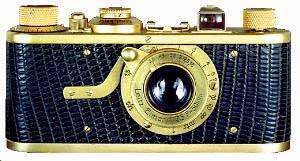
This is the first successful camera of 1924 by the company Leica.
This later expanded to the introduction of 8mm film in the early 1930s. After finding out how the 16mm wasn't cost efficient they thought of this 8mm film which was less expensive and easier to use. In the 1930s more developments were taking place. Audio was able to be recorded seperately which many people couldn't afford to do and colour film was created. This is the stage when it formed the whole skeleton of all modern cameras now where they have colour images with audio attached so the exact real life situation can be kept and re lived again and again.
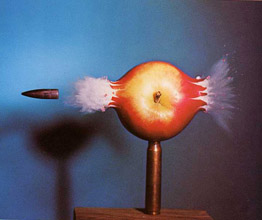
You can tell that cameras were just going from strength to strength when videos like this were taken. >
However, to take something with this high quality would cost more than any average family would be willing to spend.
^ This is a video that was captured in the 1950's on 8mm film. With the advanced technology we have now which wasn't available in the 50's is the ability to convert this into a video able to play on the computer. This was found on Youtube.com (More details about Youtube.com later). As you can tell, audio still wasn't readily available to most people at this time
For the next few decades, both 8mm and 16mm film formats were used to make home movies. Most people who were ameuters at filming preffered the 8mm film for more convienence but the professional videographers went for the 16mm for the bigger image. Home movie making continued its ongoing increase in popularity. In 1965 though, a new format called Super 8 was launched. Unlike the previous designs, which required manual loading, this new design had it done automatically. Super 8 film was easier to use and affordable to everyone. It helped people recognise the home movie technology and gave alternatives to the individuals or families who couldn't afford the 8mm or 16mm. Because of this it meant more and more people from various classes could document events in their life.
From then on the camera developed, adapted and was able to create film.
It is very hard to say when the first ever home video was made because it depends what people count as movies. For instance, are a series of pictures regarded as a movie?
Roughly however, the first home video ever made was in 1888 and it was called 'Roundhay Garden Scene' it was only 3 seconds long though. It was filmed by Louis Aimé Augustin Le Prince using the Le Prince single-lens camera which was made in the same year (1888). It was taken in the garden of the Whitley family house in Oakwood Grange Road, Roundhay, a suburb of Leeds, Yorkshire, Great Britain. It is said to have been filmed on October 14, 1888. In the film Adolphe Le Prince (Le Prince's son), Mrs. Sarah Whitley, (Le Prince's mother-in-law), Joseph Whitley and Miss Harriet Hartley can be seen walking across the garden. These family and friends are shown walking around in circles, laughing to themselves. It only includes 4 frames.
Number 1
The creation of motion picture cameras and projectors in the 1880s created a brand new audience to join in with home movie making. It lured in wealthy individuals with the financial backup to go out and purchase a home movie camera of their own. A lot of old films were actually made out of highly flammable material called nitrate. So unfortunately, we have lost a lot of the old silent films due to their flammability.
A more successful camera leading on from Le Princes' 16mm film created in the 1920's by Eastman Kodak. With these growing more and more popular, manufacturers latched onto this industry and created more. To prevent the nitrate being used the new film was created on a celluloid base. It was still the case however that only the rich and privileged could buy this breakthrough technology. This fact exapanded the idea into experimenting with less expensive film formats and material so they could create mass' more. These films were still only being created by the rich though and for own personal use.
This is the first successful camera of 1924 by the company Leica.
This later expanded to the introduction of 8mm film in the early 1930s. After finding out how the 16mm wasn't cost efficient they thought of this 8mm film which was less expensive and easier to use. In the 1930s more developments were taking place. Audio was able to be recorded seperately which many people couldn't afford to do and colour film was created. This is the stage when it formed the whole skeleton of all modern cameras now where they have colour images with audio attached so the exact real life situation can be kept and re lived again and again.
You can tell that cameras were just going from strength to strength when videos like this were taken. >
However, to take something with this high quality would cost more than any average family would be willing to spend.
^ This is a video that was captured in the 1950's on 8mm film. With the advanced technology we have now which wasn't available in the 50's is the ability to convert this into a video able to play on the computer. This was found on Youtube.com (More details about Youtube.com later). As you can tell, audio still wasn't readily available to most people at this time
For the next few decades, both 8mm and 16mm film formats were used to make home movies. Most people who were ameuters at filming preffered the 8mm film for more convienence but the professional videographers went for the 16mm for the bigger image. Home movie making continued its ongoing increase in popularity. In 1965 though, a new format called Super 8 was launched. Unlike the previous designs, which required manual loading, this new design had it done automatically. Super 8 film was easier to use and affordable to everyone. It helped people recognise the home movie technology and gave alternatives to the individuals or families who couldn't afford the 8mm or 16mm. Because of this it meant more and more people from various classes could document events in their life.
 To the right is 16mm camera created in 1965 called a H-16 REX-4. It weighs an incoveinent 6lbs! Can film 30 minutes and can film from as far as 100ft.
After the home videos were starting to be used professionaly for TV and Film VHS (Vertical Helican Scan) and Betamax arose in the 1970s. This meant that videos could be put onto this and watched on the home television set and could stand the test of time (or so they thought) The VHS and Betamax tape meant that an even smaller video camera could be used to be used. Further adjustments in technology allowed for longer and longer recording times on the tapes, increasing from 30 minutes to several hours. This is a huge milestone from the first home movies 3 seconds! At this point, the majority of families either owned video cameras or rented them, it wasn't only available to the rich anymore.
2000s and the manufacturers realised even smaller video recorders have to be invented. MiniDV cassettes were created and they offered longer filming time, more visual clarity and lower prices for it. They were also a lot lighter and portable. Suddenly, in 1997 Philippe Kahn invented the camera phone, this wa revolutionary technology which would soon become the centre of most of your lives. The first camera phone was a J-SH04, made by Sharp.

^Here is the J-SH04. the first phone to have a built in camera, it was revolutionary at the time but only available in Korea. if you wanted to buy one of these collectors items now, be willing to pay £1,270. Everyone wants to get their hands on the first ever camera phone.
Soon enough, Motorola, Nokia, Samsung and all the ocmapnies we know today wanted in on the idea. Now the image has expanded to over an astounding 10 mega pixels. Some mobiles in Europe has the oppurtunity to become a camera phone. An external camera was create to attach to the phone. However, this idea never really lifted off as it was easier to just get a camera phone. Nowadays, a very small amount can be seen without camera phones. It's very rare to see a teenager not blaring music from there phone and taking pictures.
The last few years of video camera development meant that we can record videos straight to a DVD or cameras built in memory where we can transfer it to the computer or DVD. This has eliminated every step from the 1888 camera where by the film had to manually be fixed in and the numerous image pout together has to be hand developed. No more spontaneous combustion of film strips or heavy equipment. Todays cameras are just creating laziness!
In the last 100 or more years, moving images have become increasingly more affordable, convenient, and readily available through a variety of different technology such as mobile Phones, Ipods or Games consoles. We have the ability and freedom to record our personal life, we can even create our own professional films that could be the same as a Hollywood Movie. With all the software now created to edit the movies we can pretty much do anything we want with it.
From the first camera made by Le Prince and Kodak to Samsung, Sony and Kodak is even still being used today! The new technology being made available give us the ability to create home movies on our own. Anyone can make a home movie and stick it on the Internet for millions of people worldwide to see. The technological industry of the cameras began a huge journey in 1888 to 2010 where we now have YouTube a site where absolutely anyone can put any video on there for the whole world to see. Sch programs as 'You've Been Framed' welcomes these home videos and gives a reward for the embarassing home footage of everyday mistakes and falls.
The advantage in home video equipment is astounding, the cameras themselves have advanced greatly and editing software has been created. People used to have to splice the tape to cut out what you didn't want and stick it to the other part. This was complicated as you had to be careful when sticking not to ruin the tape and you couldn't get fingerprints all over it. Nowadays, we have editing software such as: Microsoft Movie Maker; Apple iMovie; Avid FreeDV; Wax; and Zwei-Stein.
Here are some examples of the latest video cameras:
Number 2
Number 3
Number 4
Number 5
With Number one being created in 1888 it is literally the very bare minimum of a film at that time. But, in that time it was a breakthrough you can see how to the film has changed between this and number two which was created in 1995 on my first christmas. The video quality is very pixelly and not very clear, the image is dark and the colours are dull. This however, is very different compared to the 1888 film in a way that this is actually in colour and stretches to a 56 second film. This could've goen on for longer however. Unfortunately i couldn't find a video between 1888 and 1995 which could have shown a gradual change.
Number 3 is from 1996 on a trip to menorca. The footage is a little brighter from the user being able to use the effects on the camera that come with it. Both, number 2 and 3 were recorded on VHS tape. Number 4 doesn't have a date on it but i would hazard an estimate at 1996 perhaps as the boy in the video is ecstatic over a Nintendo 64 and this is the year it came out. Here, still is the lowered picture quality with viewable pixels on the screen.Lastly, number 5 is very differnent to the last three as if was recorded in 2006 with a digital camera. It s clear that the image is much more clarified and with more vibrant colours. It was transferred to DVD and put onto YouTube.
BIBLIOGRAPHY:
http://en.wikipedia.org/wiki/VHS
http://inventors.about.com/od/pstartinventions/a/Photography.htm
http://ezinearticles.com/?History-of-the-Camera&id=18736
http://youtube.com
http://www.buzzle.com/articles/history-of-the-camera.html


No comments:
Post a Comment